The United States declared war on Germany April 6, 1917. The Germans had already demonstrated that their submarines were capable of making extended cruises of distances up to 12,000 miles, and shortly before the war the Deutschland, Germany's first large merchant sub, had visited our east coast. To guard against submarine attacks, the U.S. Navy commandeered innumerable small vessels and armed them as sub chasers and mine sweepers. Huge steel nets were spread across the entrances to the larger, more important harbors, and in certain sections aircraft units were assigned to antisubmarine patrol.
The night of May 21, 1918, the government radio station at Arlington terminated its regular news report with the same announcement it had been broadcasting for months: "No submarine. No war warning." Many a radio operator, master and crewman slept more soundly that night as a result of the reassuring message, but none received it with more relief than the 77 men aboard the U-151, which at that moment was cruising on the surface at the very mouth of Chesapeake Bay.
The U-151 was the first enemy ship to invade our waters since the war of 1812. Commanded by Korvettenkapitan Von Nostitz und Janckendorf, it left Germany in April and was well supplied with mines, ammunition for her two deck guns, torpedoes and a cable cutting device. Her immediate assignment was to lay mines across the entrance to Chesapeake Bay. Her mines deposited and her cable cutting assignment completed, the U-151 headed south to inflict what damage she could on coastal shipping.
Harpathian / British Steamer / June 5, 1918 / Off Currituck
Captain Owens
Torpedoed by U-151 (Korvettenkapitan Von Nostitz)
The 4,588-ton Harpathian, bound from Plymouth, England to Newport News, was torpedoed 60 miles off the Carolina coast. She had a crew of 40 men of which 26 were Chinese. One fireman was injured during the attack and taken aboard the U-151 where he was treated by its boarding officer and surgeon, Dr. Frederick Korner. While he was being cared for, bully beef, tobacco and fresh water was passed to each of the Harpathian’s lifeboats. The wounded fireman was placed on board one of the boats and Von Nostitz gave Captain Owens the course toward land. They were sighted by the British steamship Potomac and transported to Norfolk.
Vinland / Norwegian Steamer / June 5, 1918 / Off Currituck
Captain Bratland
Torpedoed by U-151 (Korvettenkapitan Von Nostitz und Janckendorf)
The 1,143-ton Vinland was en route from Guantanamo Bay, Cuba to New York with a full cargo of sugar. When Captain Bratland first signed the U-151, he mistook her for a tramp steamer and continued on his course. Only when Von Nostitz fired a warning shot over the vessel was he aware that he was under attack. Dr. Korner and his crew boarded the steamer and, while they placed small bombs in strategic positions, Captain Bratland and his crew gathered their personal belongings, loaded them in lifeboats and rowed clear. The Vinland was sunk approx. 50 miles east of the spot where the Harpathian went down.
Vindeggen / British Steamer / June 8, 1918 / Off Currituck / 1 killed
Captain Ballestead
Torpedoed by U-151 (Korvettenkapitan Von Nostitz und Janckendorf)
Shortly after dawn June 8, the 3,179-ton Vindeggen was sighted by the U-151. At 5:30 a.m. Captain Ballestead halted his vessel and ordered his crew to abandon ship. The starboard boat capsized as she struck the water and one of the crewmen drowned. By that time, the U-151 had come close enough to establish contact and learned the Vindeggen carried 2,000 tons of copper bars in addition to 6,000 bales of wool and hides. Von Nostitz decided to try to transfer part of the cargo to his own vessel but the sea was too turbulent to attempt a transfer. He ordered Captain Ballestead to get his men back aboard and, with the U-boat following close behind, the Vindeggen headed toward the open sea.
Shortly afterward, another steamer appeared and, using the Vindeggen as a decoy, the U-boat was able to approach almost within hailing distance before being seen. This was another sugar ship, the Pinar Del Rio (see next).
The U-151 and the Vindeggen proceeded further offshore and, when the sea calmed down, a woman and child—the wife and young daughter of Mate Ugland—were moved to the sub, where the officers’ quarters were turned over to them. The crews of the two vessels transferred some 80 tons of copper bars to the sub, replacing pig iron ballast which was thrown overboard. On June 10 the Vindeggen was exploded and sunk after her crew was put into their lifeboats.
Throughout that day Mrs. Ugland and her daughter remained aboard the sub while the Vindeggen’s lifeboats were towed along behind. During the afternoon, the 4,322-ton Norwegian steamship Heinrich Lund, and her lifeboats were added to the flotilla of open boats being towed by the U-151. That evening the sub sighted the steamer Brosund, which was given a choice of taking aboard the survivors of the Vindeggen and Heinrich Lund or being sunk; 15 minutes later the Brosund, with Mrs. Ugland, her daughter and 66 crewmen from the two sunken vessels, safely left the scene.
Pinar del Rio / British Steamer / June 9, 1918 / Off Nags Head
Captain John MacKenzie
Torpedoed by U-151 (Korvettenkapitan Von Nostitz und Janckendorf)
The 2,504-ton Pinar del Rio was bound for Boston from Cuba. Her crew of 34 launched two lifeboats and, when they were clear of the vessel, the U-151 began shelling her at short range. She sank, with 25,000 bags of sugar, approx. 80 miles northeast of Nags Head. Eighteen of her crew, including the captain, were picked up shortly thereafter by a fruit steamer en route to New York, and the remaining 16 were discovered by a second steamer bound overseas. The story that came out of Manteo the following day was that a submarine which had sunk the Pinar Del Rio was accompanied by a large “mother” steamer which presumably was serving both as a supply ship and as a decoy.
O.B. Jennings / Standard Oil Tanker / August 4, 1918 / Off Wash Woods / 1 killed
Captain George Nordstrom
Torpedoed by U-140 (Fregattenkapitan Waldemar Kophamel)
The U-140 encountered the O.B. Jennings approx. 60 miles S.E. of Cape Henry on August 4 and immediately fired a torpedo at the tanker’s port bow. A Standard Oil Company tanker, the Jennings carried a full gun crew and was returning empty from Plymouth, England to Newport News. Captain Nordstrom spotted the torpedo shortly after it was fired and managed to elude it. He then ordered full speed ahead, manned the single four-inch gun on the after deck and for the next hour engaged in a running gun battle with the submarine.
Nordstrom gave good chase, zigzagging time and again to confuse the U-boat’s gunners, and dropping smoke boxes overboard to screen his vessel. The U-140 fired 40 shells—one tenth her total supply—before finally making a hit. At 11:30 her gunners began making contact at almost every shot, and 10 minutes later a shell struck the engine room. A second hit the taker’s magazine, causing a tremendous explosion. Her ammunition spent or destroyed, and her engines out of commission, the Jennings was beat. Crewman, Second Steward James H. Scott had been killed and several others were wounded. Nordstrom sent a frantic wireless message for assistance and, as the crew lowered the boats, he exchanged clothes with the dead steward and joined the others in the lifeboats at 12:20 p.m.
Three lifeboats were launched: one in command of Captain Nordstrom (dressed as a steward), the second under Chief Engineer Albert Lacy and the third under First Officer William J. Manning. The U-boat came up alongside the three boats to inquire for the Captain but was informed that he had been killed. They then took on board Second Office Rene Bastin as a prisoner, fired several more rounds at the Jennings, and as she rolled over and sank left the scene with Second Officer Bastin still aboard.
During the night the three boats became separated. The USS Hull, which had intercepted the Jennings’ wireless message, arrived shortly after dark and located the lifeboats commanded by Lacey and Manning. Nordstrom’s lifeboat was located the following morning by the Italian steam Umbria.
Stanley M. Seaman / Schooner / August 5, 1918 / Off Cape Hatteras
Captain William McAloney
Torpedoed by U-140 (Fregattenkapitan Waldemar Kophamel)
A 1,060-ton sailing craft, the Stanley M. Seaman was loaded with coal and en route to Puerto Plata, San Domingo from Newport News. On August 5, U-140 spotted the Seaman and shot through her rigging. Captain McAloney lost no time in taking the U-boat’s hint. He and his eight-man crew abandoned their ship in such a hurry that they took off in a yawl instead of spending the extra time to lower their motor launch. In their haste, the men also failed to take water or provisions of any kind.
When the sub came up alongside, Kophamel learned of this and suggested they return to exchange boats; the U-140 waited while ample provisions were stored in the motor boat and the 9 men again pulled clear. The Seaman was sent to the bottom with bombs and for the next three days her crew wandered about off Cape Hatteras, finally being picked up by a British steamer which landed them back at Newport News.
Merak / American Steamer / August 6, 1918 / Little Kinnakeet
Unknown
Torpedoed by U-140 (Fregattenkapitan Waldemar Kophamel)
Kophamel’s next target was the 3,024-ton coal-laden Merak, en route to Chile from Newport News. The day was calm with a moderate S.W. breeze and hazy sky. The Merak zigzagged down the coast at full speed as more than 30 shots were fired at her without a hit. But the shifting sands of Diamond Shoals proved a more fatal foe to the Merak, for she suddenly grounded on its fringe and stuck fast. Two lifeboats were quickly launched, with 23 of her crew boarding one and 20 on the other.
Seeing the Merak was aground and being abandoned by her crew, Kophamel turned his attention to Diamond Shoals Lightship No. 71 (see next story). As that went on, one of the life boats from the Merak reached shore and the other picked up at sea by a patrol boat. After sinking the lightship, U-140 returned to pick up the Merak’s papers and finish her off with bombs.
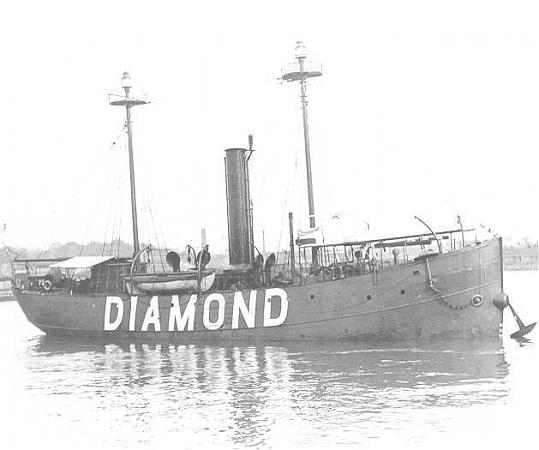
Diamond Shoals / Lightship #71 / August 6, 1918 / Cape Hatteras
First Mate Walter L. Barnett
Torpedoed by U-140 (Fregattenkapitan Waldemar Kophamel)
First Mate Walter L. Barnett was in command of the lightship on the day it was attacked by U-140. Shortly after noon he heard the sound of shellfire north of the lightship and climbed the mast, attempting through binoculars to locate the source of the firing. Suddenly he spotted a puff of smoke, then another, and as the haze lifted slightly he could make out the low-slung outline of a submarine and the vessel it was shelling, less than half a mile away. He hurried back to the wireless shack and send the following message: “Enemy submarine shelling unknown ship E.N.E. ¼ mile off lightship.”
That message may have been the lightships undoing, because until then the U-140 had not turned its guns on the anchored vessel. “Her first shot took away our wireless,” Barnett said, “but the next five were aimed wide and missed us. We had been painting our yawl boat that morning and she was hauled up on the davits with nothing inside but a small canvas sail. I called for her oars, and had the yawl lowered to the water.”
Lightship #71 was a 124-foot coal burner, held in place by 185 fathoms of heavy chains firmly attached to a 5,000-pound mushroom anchor embedded in the sandy shoal. At best, it took five hours to get her underway, so Barnett stood no chance of eluding the U-boat. The wise decision was to quickly abandon ship before the sub’s gunners found the range again.
“Within ten minutes we had the whaleboat overboard, and the twelve of us shoved off from No. 71,” Barnett said, “We had seven oars, six fourteen-footers for rowing, and a sixteen-foot sweep oar. I put the large oar over the stern and six of the crew grabbed the others, and we headed to the west’ard as fast as they could row. Roberts, the chief engineer, had left his false teeth behind, and none of us had saved anything but the clothes we had on our backs, but nobody seemed bothered too much about that.
“We rowed for maybe five miles and all the time the sub kept firing at No. 71. Finally, we could just see her go down in the distance. By then the sub was way out of sight, so I told the boys to pull in the oars, and I mounted the sail, using the sweep oar for a mast.”
Barnett’s whaleboat left the lightship at 2:35 p.m., 14 miles from the point of Cape Hatteras, but land was not sighted by the 12 survivors until just before dark. They landed at a point opposite the Cape Hatteras wireless station at 9:30 p.m.
Mirlo / British Tanker / August 16, 1918 / Chicamacomico / 10 killed
Captain W.R. Williams
Mines from U-117 (Kapitanleutnant Droscher)
 |
| Mirlo |
The 6,679-ton Mirlo, with a crew of 52, picked up a full cargo of gasoline in New Orleans and headed for Norfolk on August 10. Despite the absence of the Diamond Shoals Lightship, she passed Cape Hatteras in safety soon after noon on the 16th and proceeded north toward Wimble Shoals.
The wind was light and the sea somewhat calm when, opposite Wimble Shoals Light Buoy, a terrific explosion rocked the ship, wrecking the engine room and putting the lights and wireless out of commission. Captain Williams ordered his lifeboats made ready for lowering and attempted to reach the beach. He reported later that his vessel was torpedoed, though he did not actually see a torpedo and the absence of enemy subs in the area makes it quite certain that the Mirlo struck an enemy mine.
The original explosion was witnessed by the lookout in the Chicamacomico Coast Guard Station, 7 miles N.E. of the light buoy. Keeper John Allen Midgett was summoned and ordered out his power lifeboat. While the lifesavers were making ready to put to sea, a second explosion took place on the Mirlo, her cargo of gasoline caught fire and Captain Williams, having given up all hope of beaching the ship, ordered his lifeboats lowered away. The first lifeboat to be lowered fouled the stays and capsized—it’s 16 men all managed to reach the overturned boat and were able to hang on. The other two boats were lowered safely—one with the Captain and 16 men, the other with Boatswain Donalds and 18 men.
The third and final explosion took place cutting the ship in half and spewing its cargo of highly inflammable gasoline over the water in all directions. The Captains boat was soon clear of the sea of fire; the second, without oars, drifted aimlessly in the increasing wind; and the third, capsized boat was in the path of burning fuel that was gushing from her hold—the men were covered with gasoline—their clothes, hair and bodies on fire. Ten men disappeared from view, leaving six holding onto the overturned boat. Only by repeatedly submerging themselves under water were they able to remain alive.
Captain John Allen Midgett of Chicamacomico Station and 6 surfmen headed for the towering cloud of flames rising from the sea on Wimble Shoals. On the way he met the Captain’s lifeboat and gave instructions to proceed to shore and wait for his return. The wind had freshened almost to gale intensity and the waves were building up in size and force. Midgett learned that two other boats had been launched and that one of them had capsized near the sinking ship. Midgett and his crew proceeded within a few hundred yards of the Mirlo where they were confronted by a sea of fire and great cloud of black smoke. They circled the cloud, coming up on the lee side and finding an opening in the blazing surface of the sea. Down this opening they saw the overturned lifeboat, with men still clinging to it.
Without a moment’s hesitation, Midgett turned his wooden boat toward the blazing sea and ordered the crew to man their oars. He skillfully maneuvered her down the open passage, moving directly through great sheets of fire at times, constantly wrapped in black smoke and barely able to see through the darkness surrounding them. Six men—exhausted, burned and blackened, hysterical and unbelieving—were pulled into the surfboat. One of Midgett’s men collapsed in the bow and had to be replaced. His mission complete, Midgett turned about and headed toward the open sea. But his job was not yet finished.
Boatswain Donalds’ boat was the smallest of the three, but it carried the most men. The gunwales were now almost level with the water and she shipped water with every wave. Flame, blown by the wind, seared the flesh of the men huddled in the tiny boat and set fire to its sides. Shirts were taken off and used to beat at the fire, then trousers and all other clothing, until the men were naked. The boat continued to burn, their flesh was singed and they could see nothing through the cloud of black smoke surrounding them.
Captain Midgett circled the burning mass but was unable to find the third boar until dusk, when he saw it drifting before the wind with its cargo of nude, blackened men. He and his crew hurried toward the boat, passed a line aboard, headed back for the beach and safely landed 42 of the 52 who had been aboard the Mirlo.
Captain Midgett and his crew (Zion S. Midgett, A.V. Midgett, Prochorns L. O’Neal, L.S. Midgett and C.E. Midgett) received Gold Lifesaving Medals from the U.S. government, and Victory Medals from the British. Their own burns healed, they returned again to their lonely vigil on the coast.
Nordhav / Norwegian Bark / August 17, 1918 / Off Bodie Island
Not Known
Torpedoed by U-117 (Kapitanleutnant Droscher)
 |
| U-117 |
The 2,846-ton Nordhav was loaded with linseed oil and en route to New York. It was torpedoed and sunk by the U-117 on August 17.